
What Are Heat Recovery Ventilation Units?
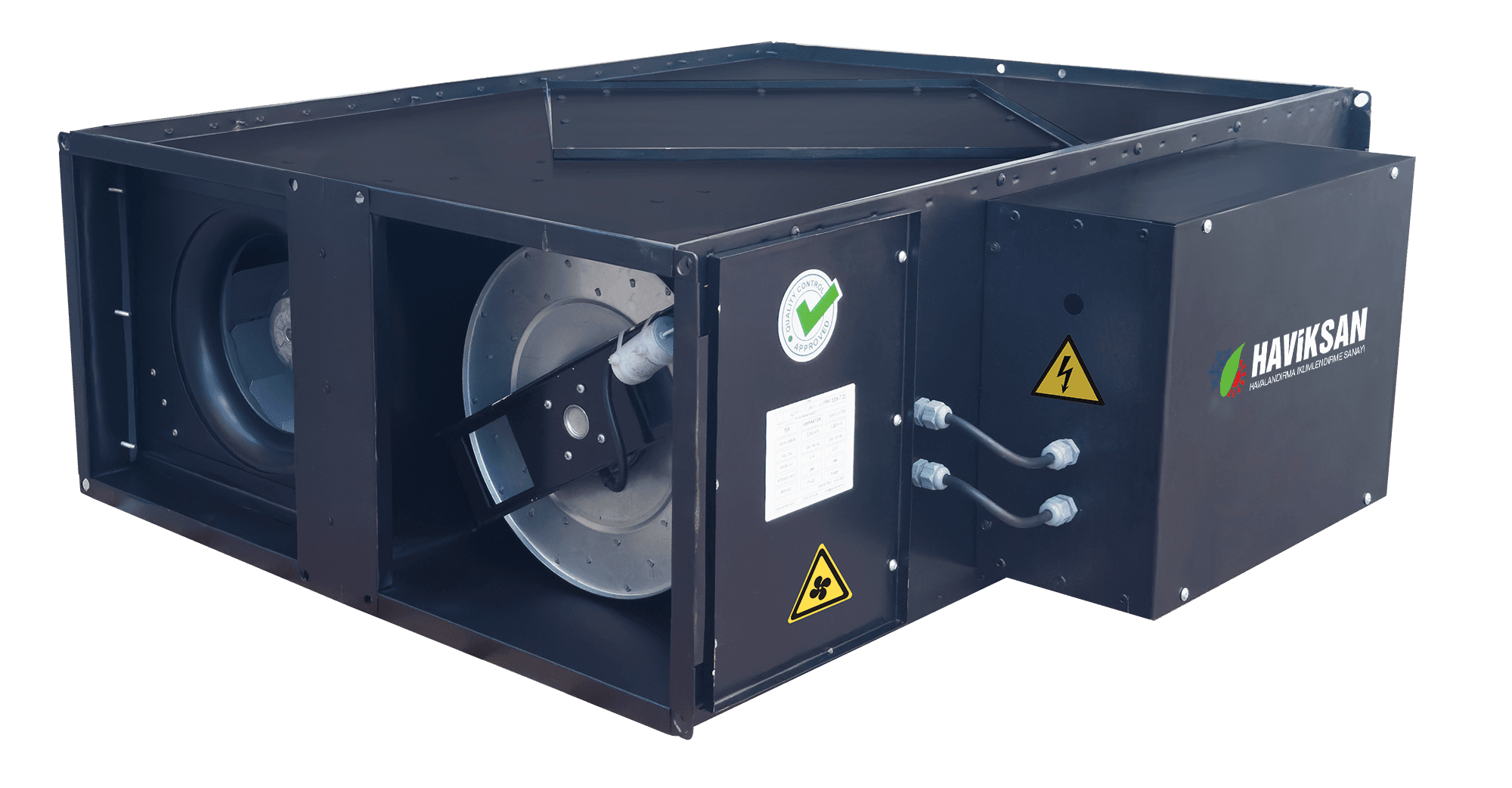
What Does a Ceiling-Mounted Heat Recovery Unit Do?
These units perform two functions simultaneously:
Exhaust polluted indoor air
Supply fresh outdoor air to the space by preheating or precooling it using the heat of the exhausted air
As a result:
In winter, warm air is not wasted
In summer, cooled air is not lost
Why Choose a Ceiling-Mounted Heat Recovery Unit?
Ceiling-mounted models are especially preferred in spaces with suspended ceilings, as they allow installation without occupying floor space.
Main advantages:
Space-saving
Quiet operation
Aesthetic solution
Suitable for duct connections
Advantages of Ceiling-Mounted Heat Recovery Units
High Energy Savings
Thanks to heat recovery efficiency:
Heating costs are reduced
Air conditioning load decreases
Continuous Fresh Air
Indoor CO₂ levels are reduced
Odors and stuffy air are prevented
Quiet and Comfortable Operation
Low noise levels
Balanced air distribution
Filtered Air Intake
Dust and particles are captured
A healthier indoor environment is provided
Where Are They Used?
Ceiling-mounted heat recovery units have a wide range of applications:
Offices
Retail stores
Cafés and restaurants
Residential projects
Meeting rooms
Educational institutions
Clinics and medical offices
What to Consider When Choosing a Ceiling-Mounted Heat Recovery Unit?
Airflow Capacity
The unit should be selected with an airflow capacity suitable for the size of the space. Insufficient airflow reduces system efficiency.
Heat Recovery Efficiency
Models with high-efficiency heat exchanger structures should be preferred.
Noise Level
Low dB levels are especially important in offices and residential areas.
Filter Structure
Easily replaceable and commonly available filter types are an advantage.
Conclusion: Comfortable and Energy-Efficient Ventilation
Ceiling-mounted heat recovery units are ideal solutions for modern buildings, offering energy efficiency, fresh air, and comfort at the same time. A properly sized unit not only reduces operating costs but also improves overall quality of life.